
High Compression That Doesn't Roll Down When You Sit
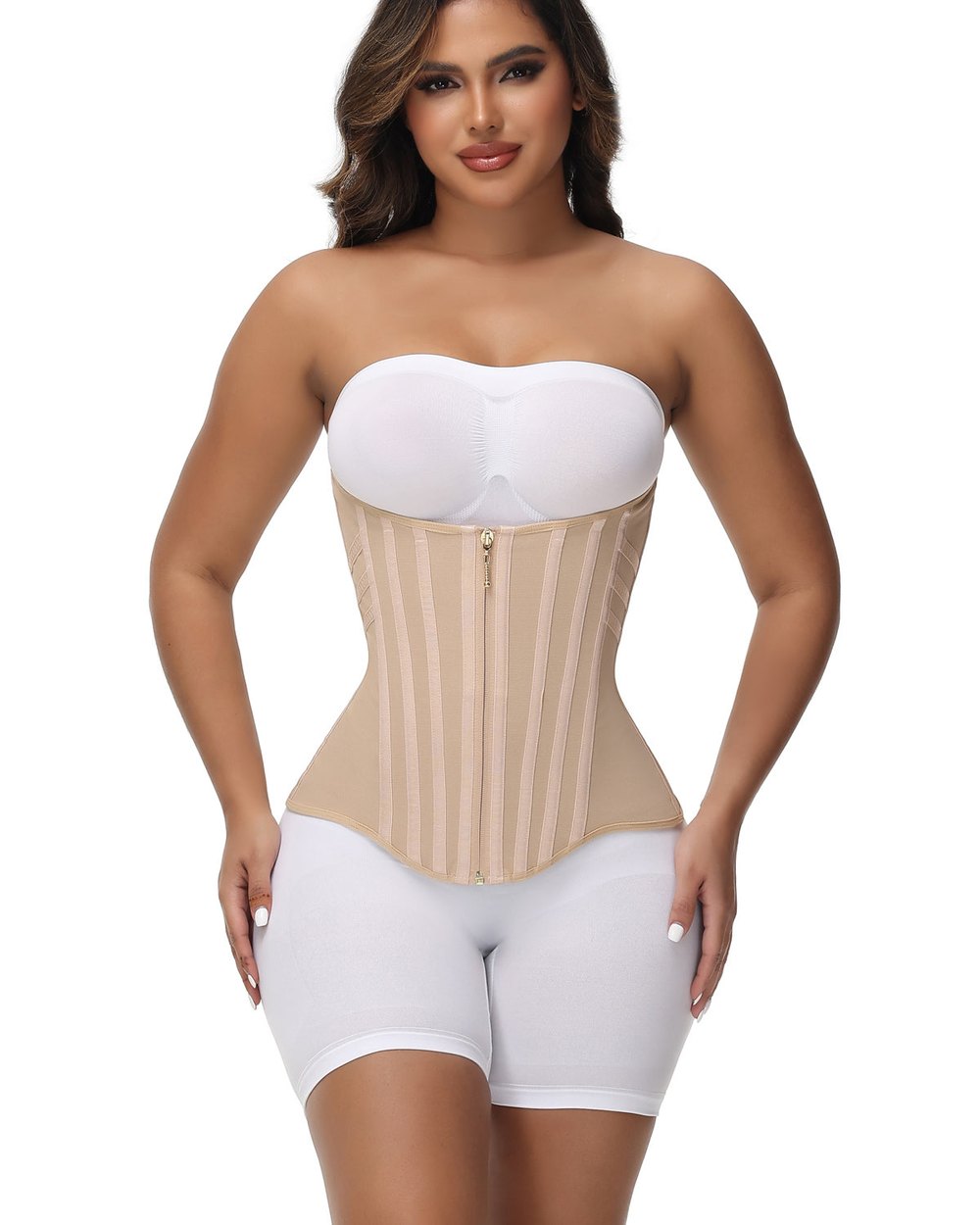
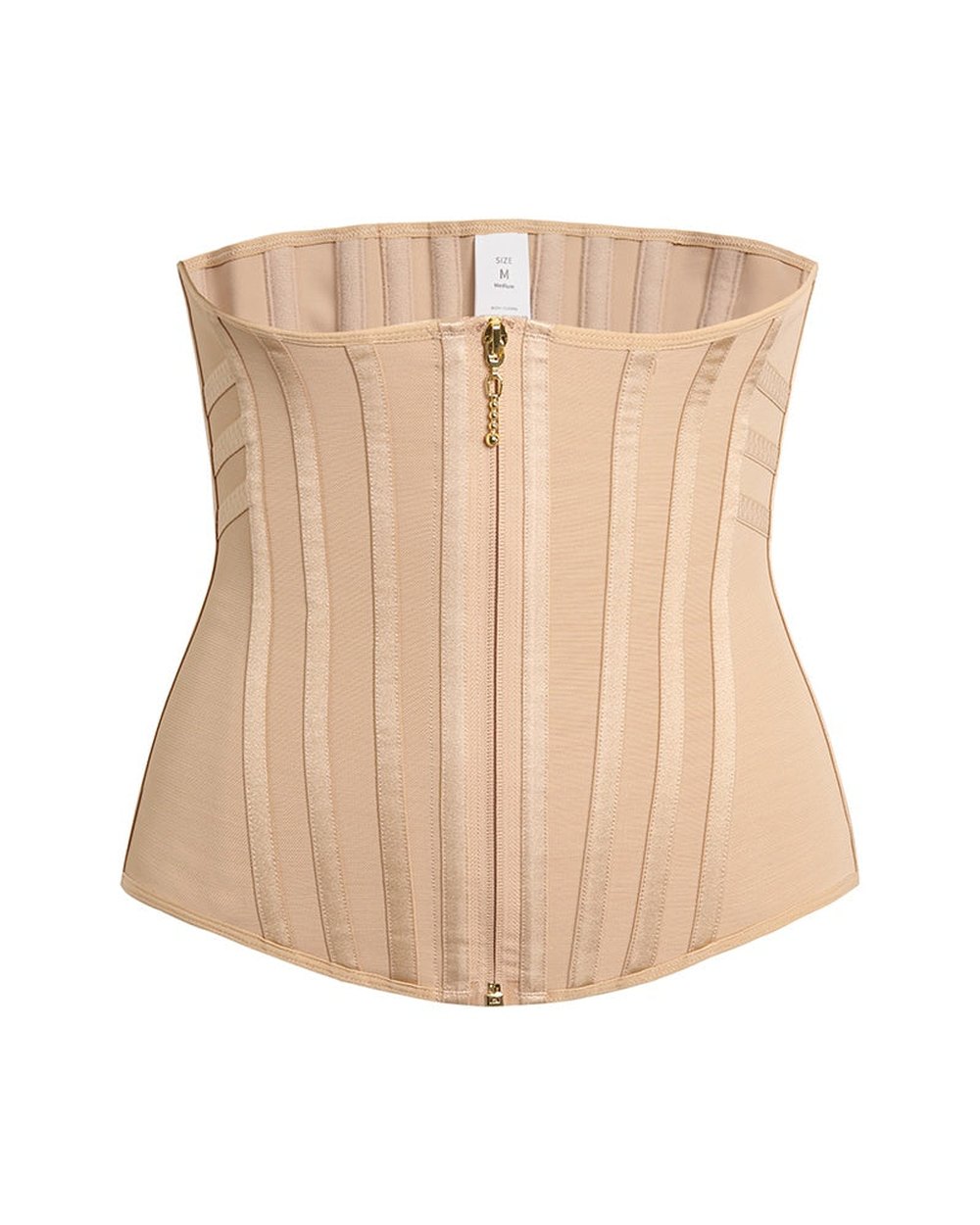
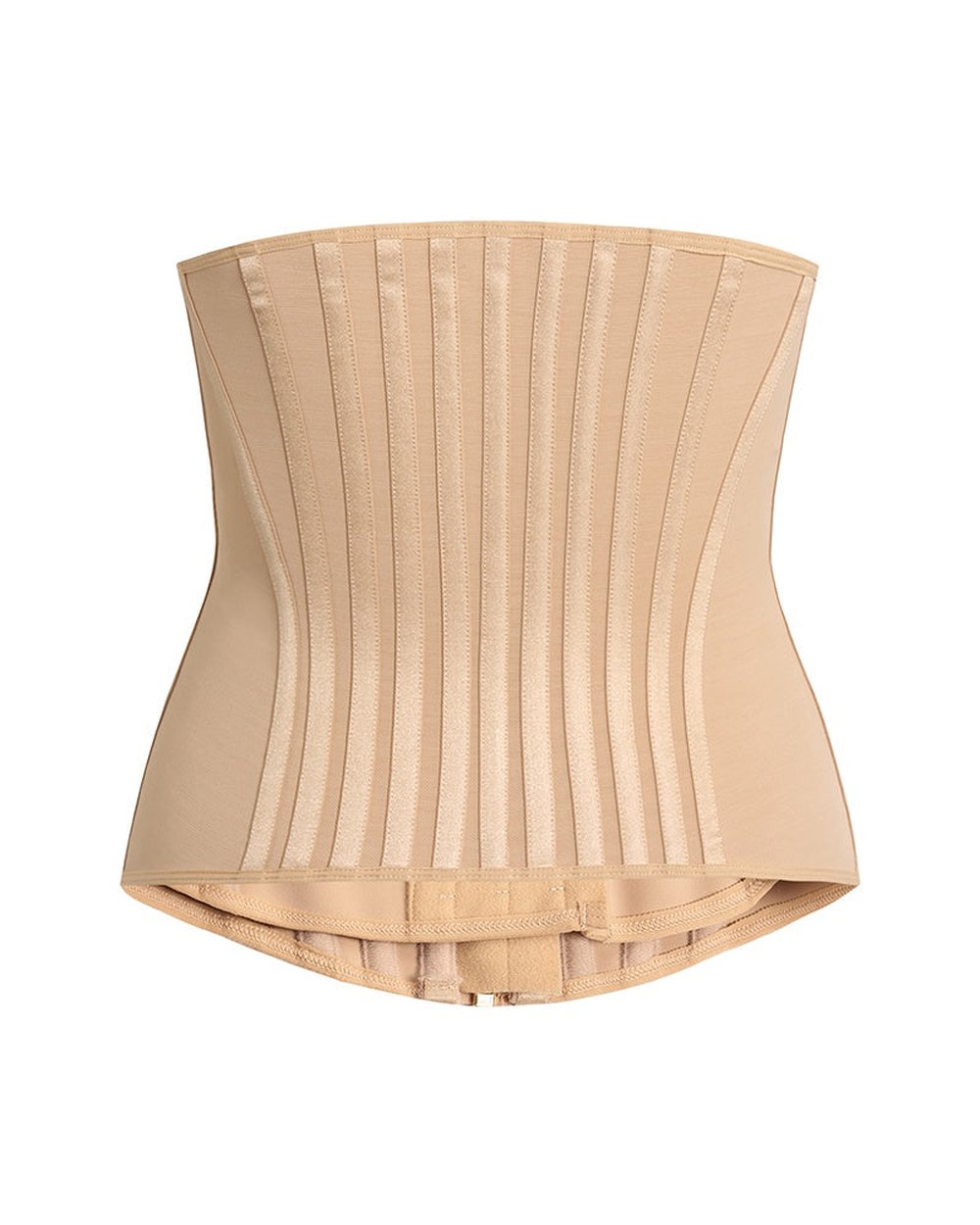
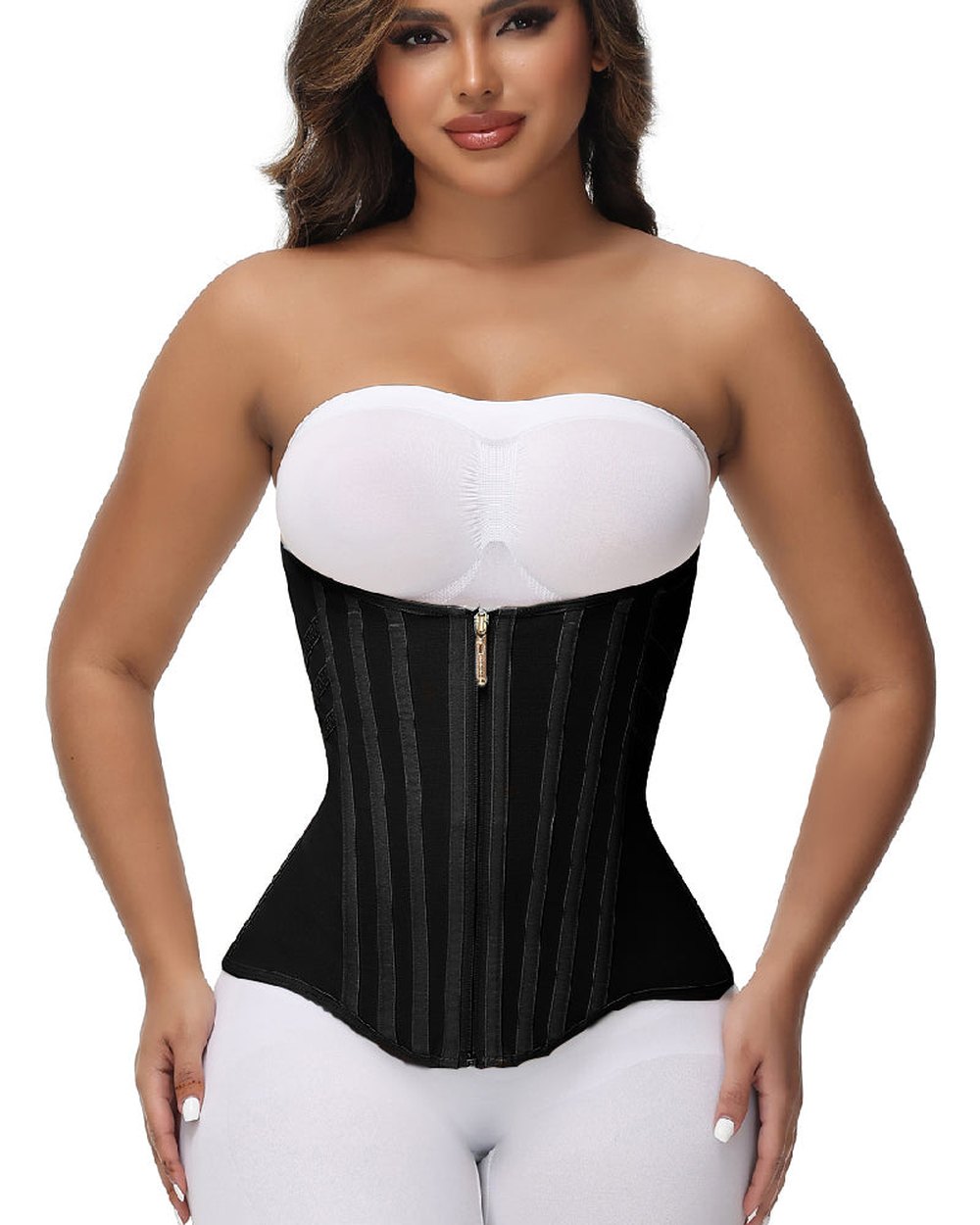
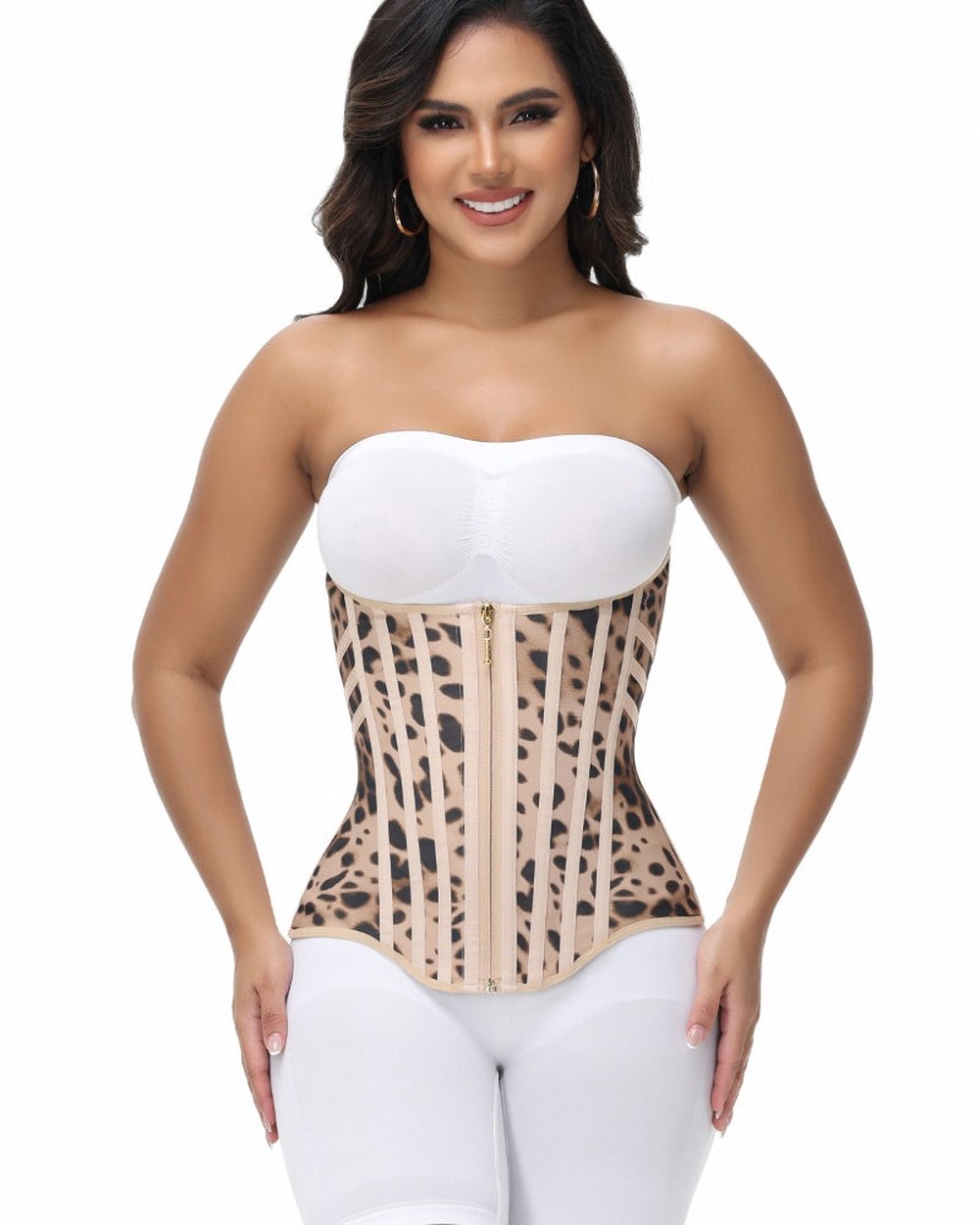
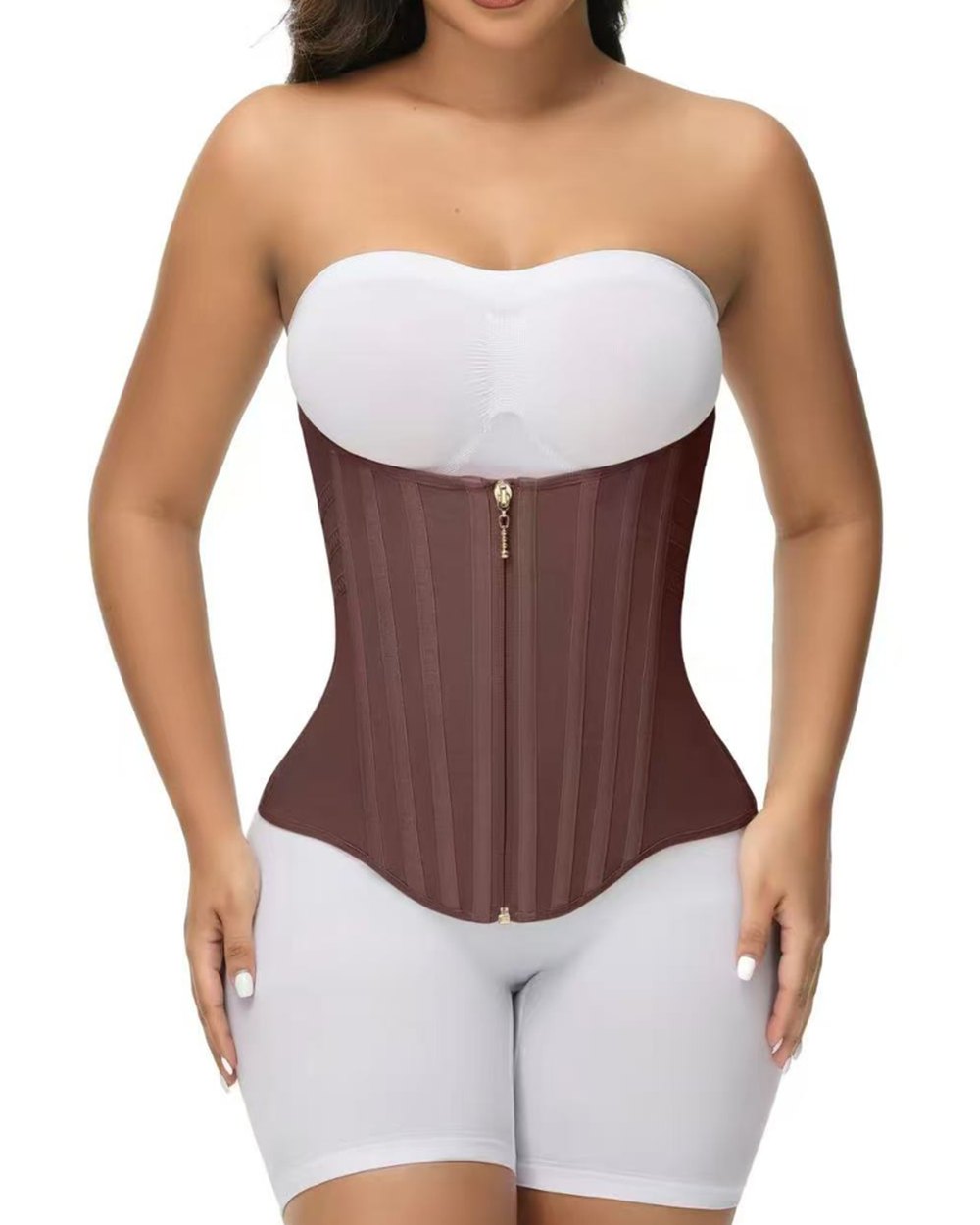
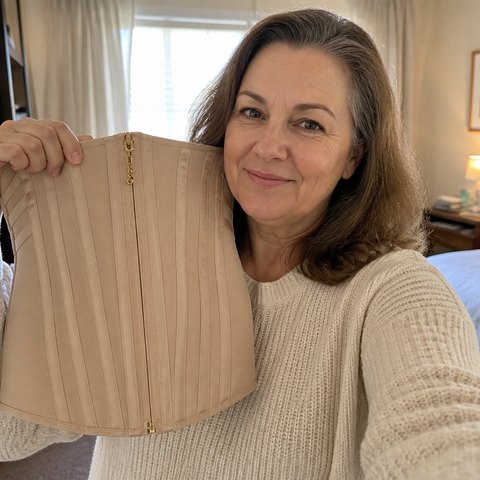
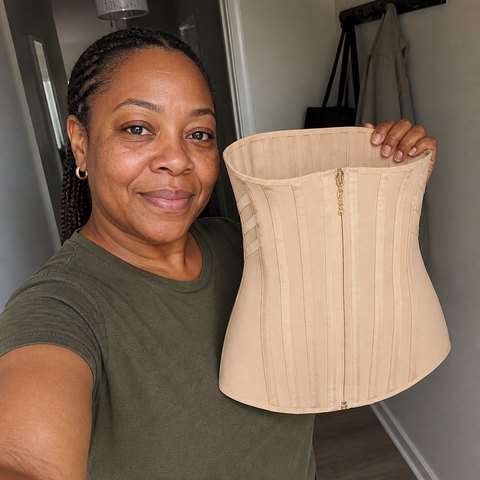
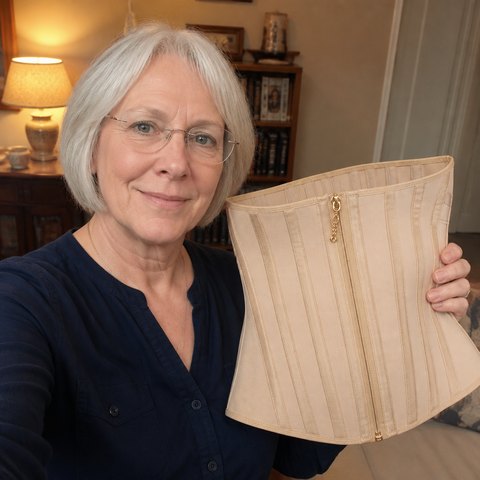
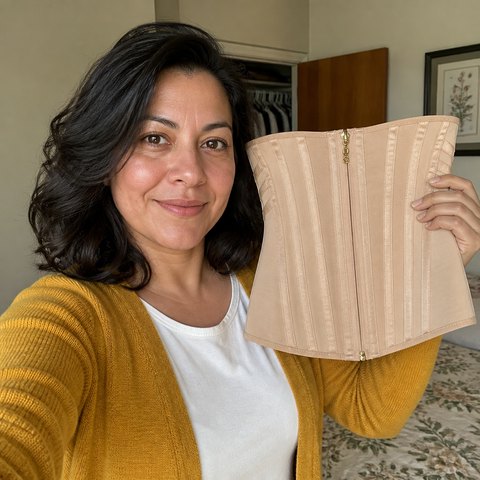
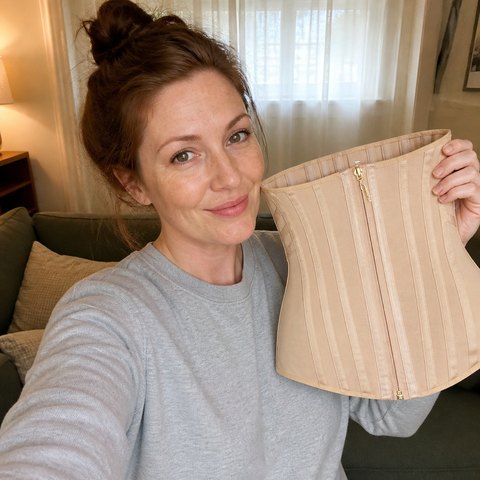
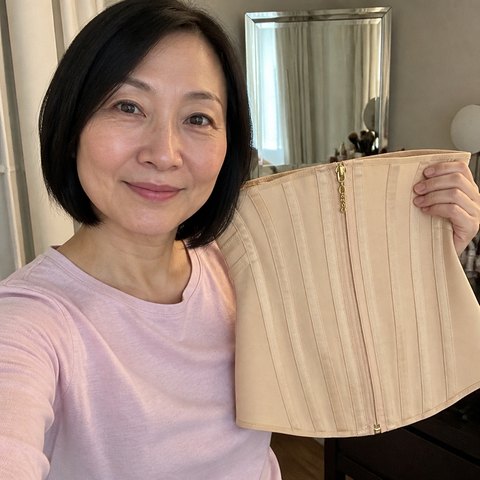
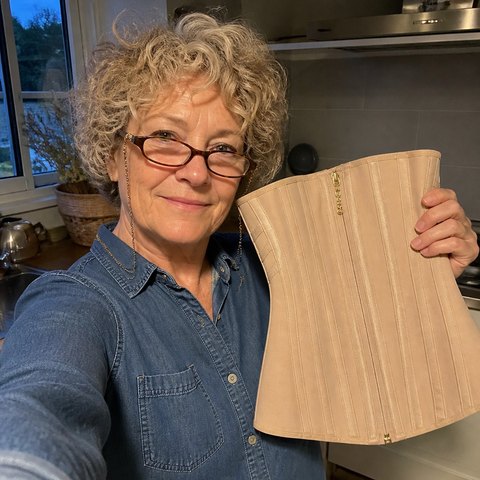
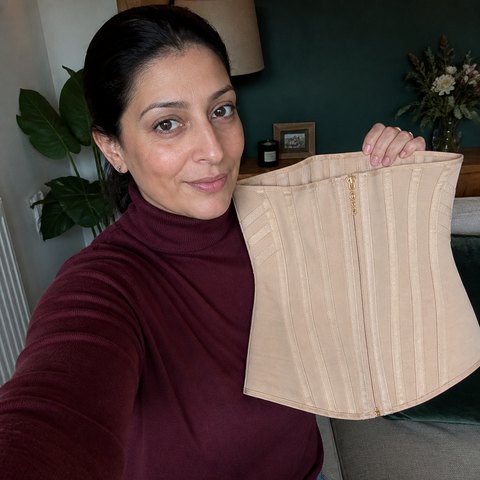
Curved steel boning, shaped to follow the body instead of fighting it. That is the difference between a corset you take off at lunch and one you forget you are wearing. Cut high at the back and low at the front, with a three-row hook so the same corset can be worn at three different tensions.
- High compression through the waist and lower stomach, held all day
- Curved steel boning follows your torso instead of digging into your ribs
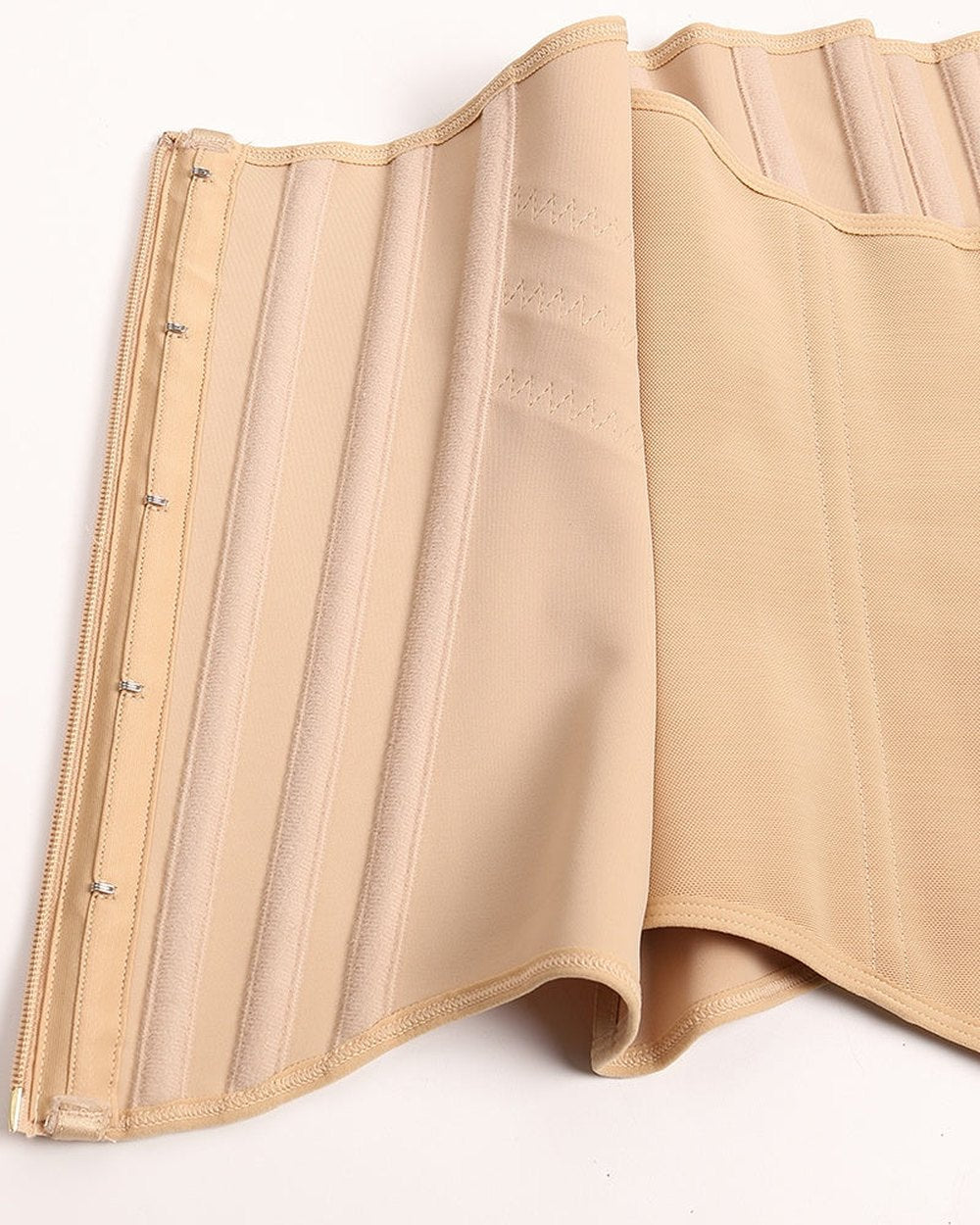
- Three-row hook-and-eye, so one corset gives you three tensions
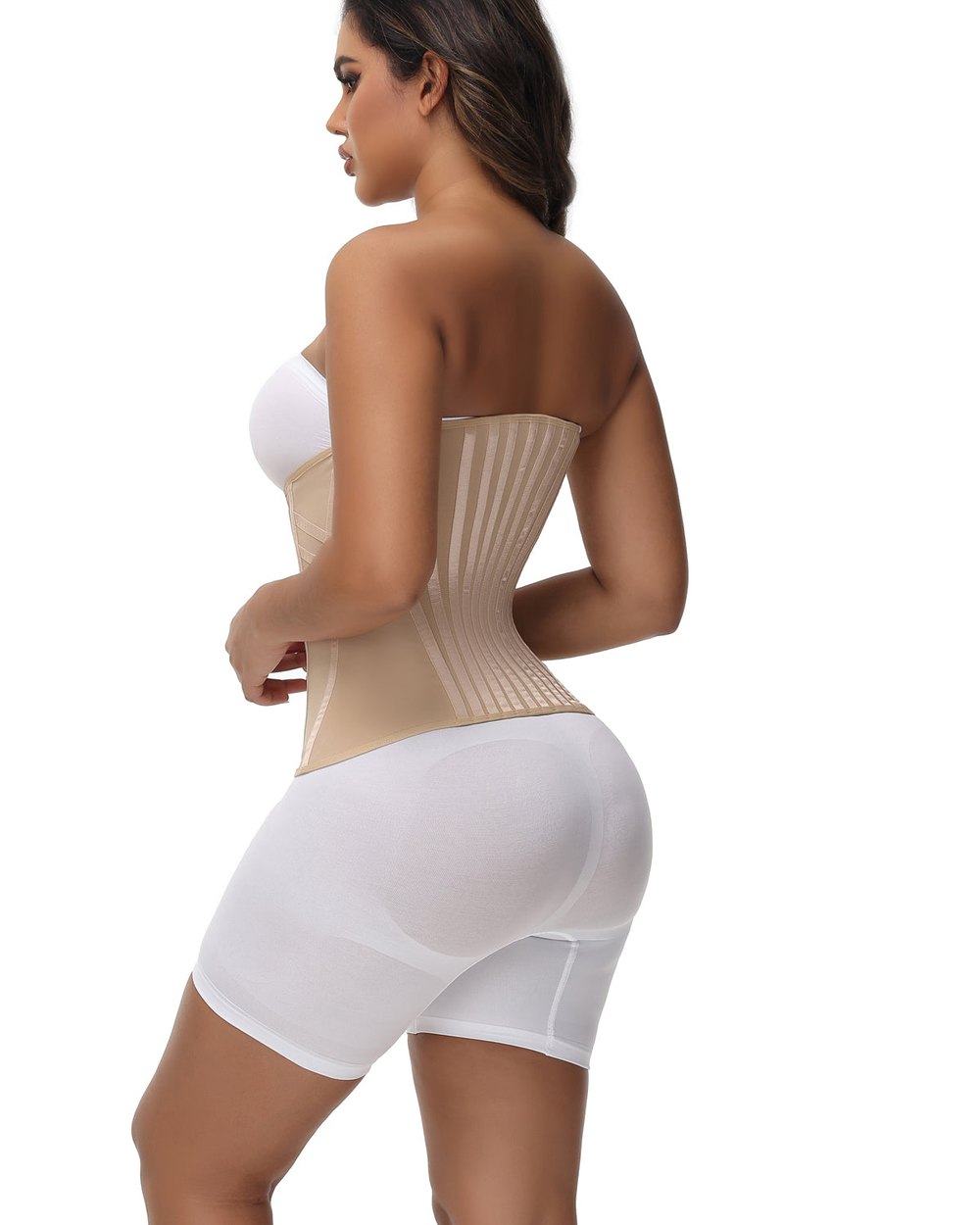
- Cut high at the back and low at the front to cover the lower belly
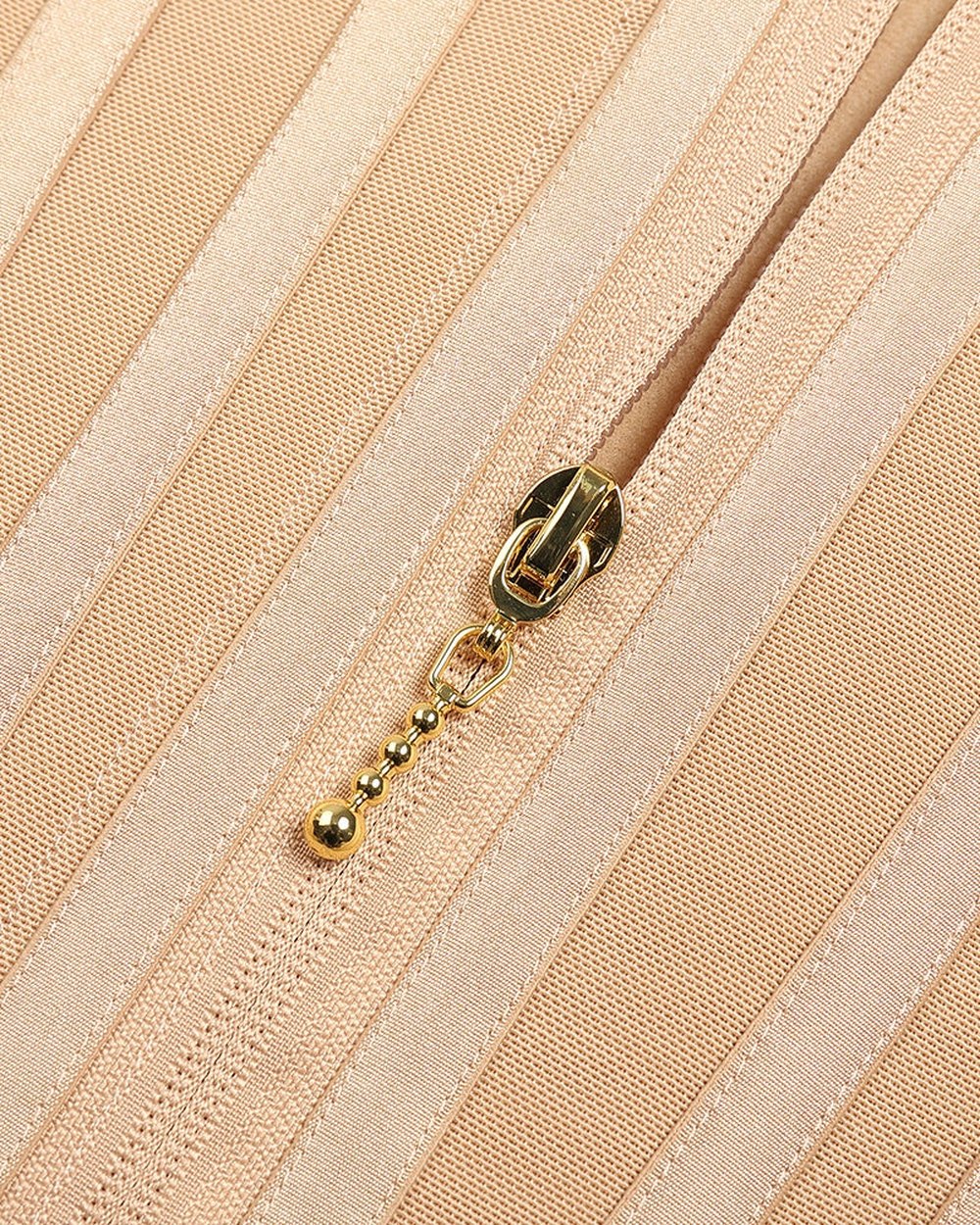
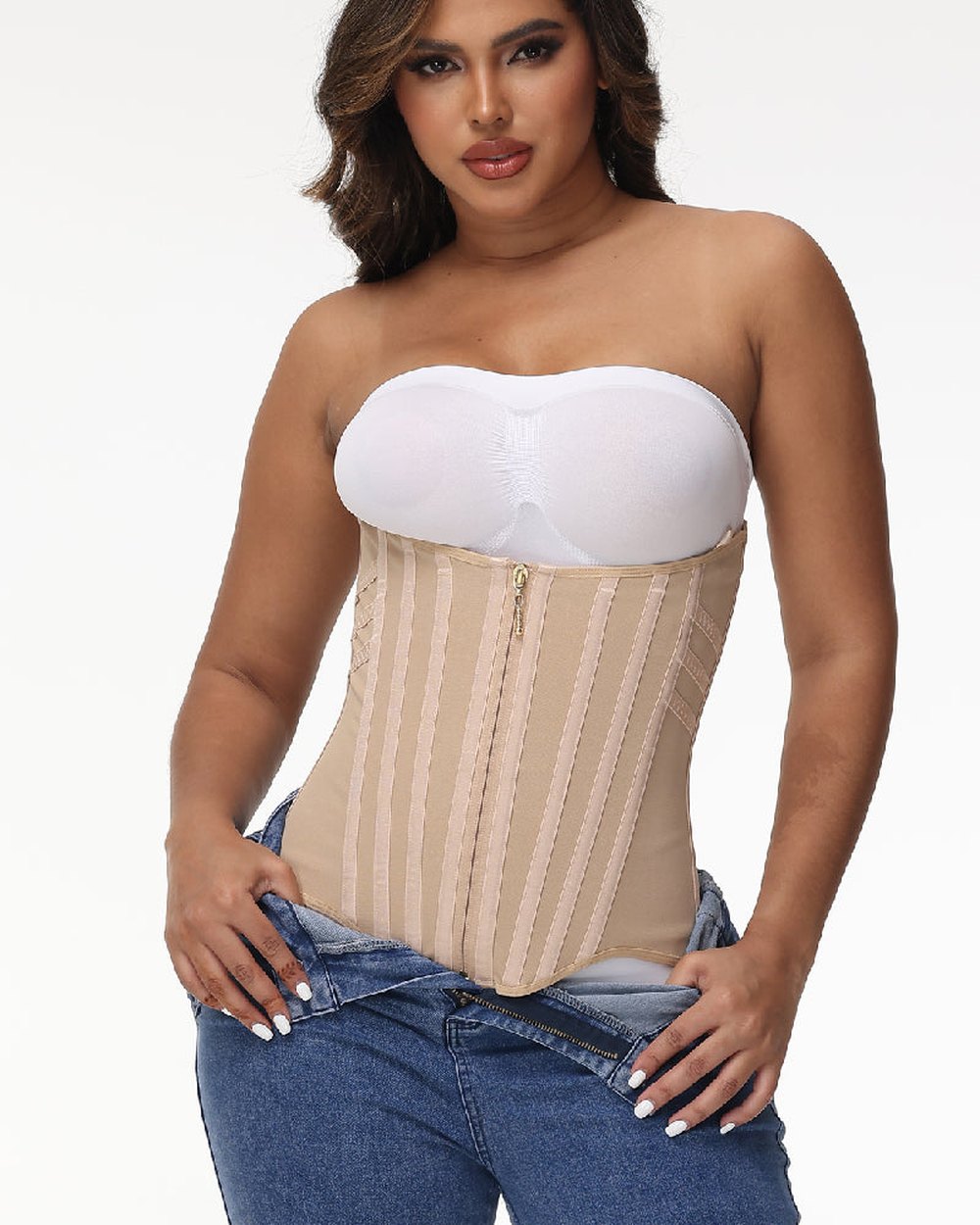
- Front metal zip, so you can get into it on your own
- Smooth enough under a dress, a shirt or jeans
Shipping calculated at checkout.
30-day returns and exchanges.
Sized by measurement, not by dress size. Check the chart before you order.
Measure your natural waist - the narrowest part of your torso, usually just above the navel - and take the row your measurement falls in on the chart above. Do not order off your jeans or dress size; both are cut at the hip and will send you a size out. If you are between two rows, take the larger one and start on the outside hook row. Two of the three hook rows exist precisely so the corset does not have to be perfect on day one.
On the outside hook row, for most people, yes - and the curved boning is the reason. Bones shaped to the torso spread the pressure along their length instead of concentrating it at the bottom rib and the top of the hip, which is where a straight-boned corset becomes unbearable. That said, the first hour of the first wear feels like a lot no matter what you buy. Start with two or three hours rather than a full day.
Under fitted knitwear, shirts, dresses and jeans, it is not visible - the top and bottom edges are finished flat rather than elasticated, so there is no ridge. Under very thin or very clingy jersey you may see the boning channels if you look for them. The high back is part of this: it goes all the way up rather than stopping mid-back, so there is no line across your shoulder blades.
Hand wash in cool water and hang it to dry. No machine, no tumble dryer, no iron, no bleach and no dry cleaning. Steel boning and elastic both take permanent damage from heat, and a machine cycle can bend a bone out of true - which you cannot straighten back. Washed by hand it holds its shape.
Most Shapewear Makes You Choose Between Holding You In and Being Wearable
The compression that actually creates a waist is the compression you cannot keep on. That is the trade every woman who has bought shapewear already knows, usually from a drawer full of things that were worn once.
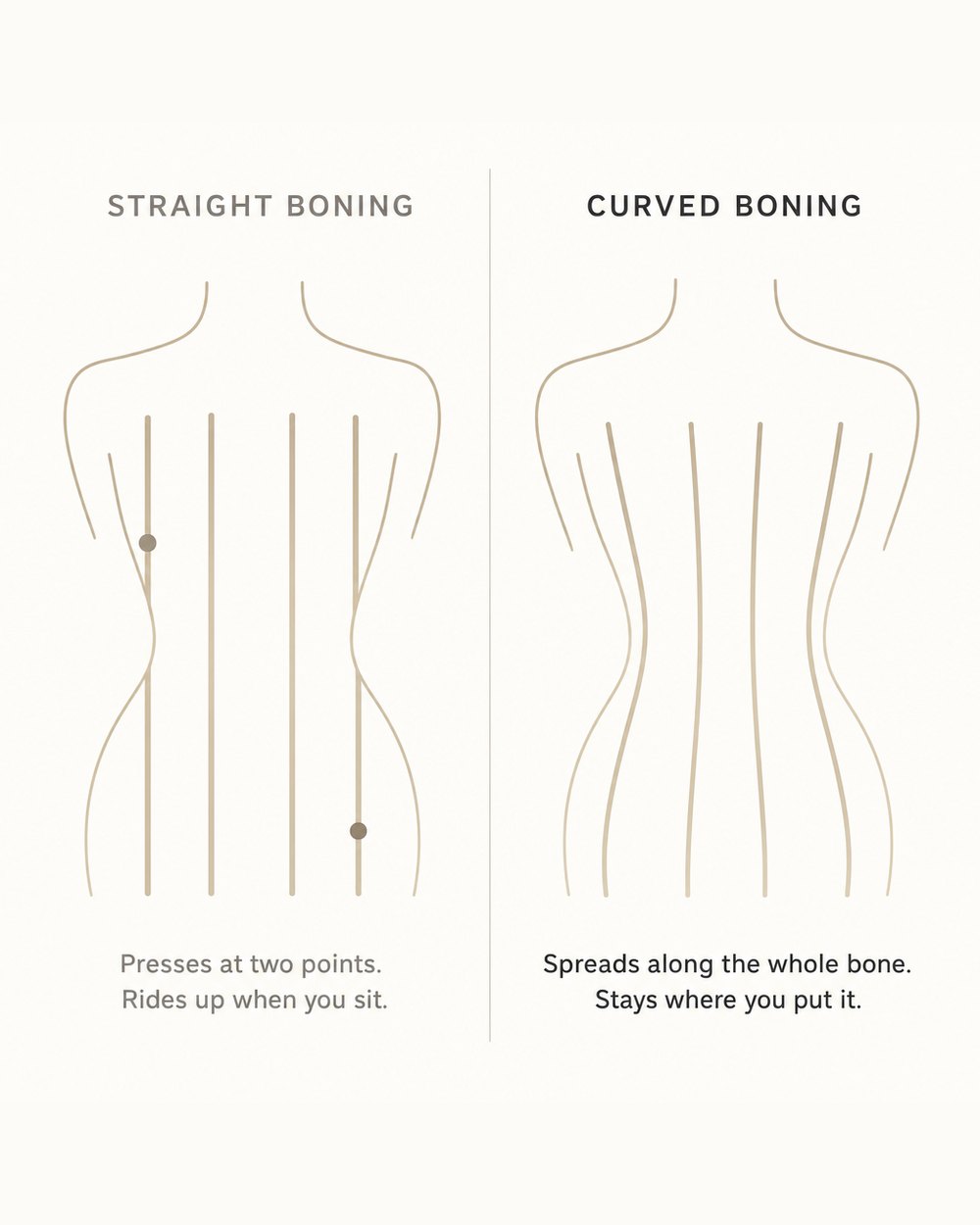
It is not a fabric problem. It is a shape problem. A garment built on straight vertical bones is trying to hold a curved body in a straight line, so it presses hardest exactly where your ribs flare and your hips start - and it rides at the waist, because the waist is the one place a straight line has nothing to sit against. Loosen it and it stops working. Keep it tight and you are counting down to when you can take it off.
So the answer is not softer, and it is not tighter. It is boning shaped like the body it is going on.
What Most People Try First
Latex waist bands
Hot within the hour, and they roll down the moment you sit. The one thing they hold well is heat.
Seamless smoothing shapewear
Compresses evenly from ribs to hip, which smooths you but does not create a waist. Even pressure cannot make a curve.
Straight-boned corsets
They do create the waist. They also dig at the bottom rib and roll at the middle, because the bones are straight and you are not.
Control-top tights and shorts
They work below the waist. Everything they push out of the way has to go somewhere, and it goes up.
Going up a size in the dress
Solves the tightness and loses the shape, which was the reason for the dress.
Holding it in
Works for the length of a photograph. It is not a garment and it never was.
Curved Bones Are the Whole Difference
A bone that is curved sits along your torso rather than across it. The pressure spreads down the length of the bone instead of concentrating at the two points where a straight bone meets a curved body - the bottom of the ribs and the top of the hip. Same compression, no hot spots, and nothing for the garment to pivot on when you bend.
That is also why it stays where you put it. Rolling happens when a garment has only fabric tension holding it in place. Boning that matches the body's own line has the body itself as the anchor, and that is the difference you feel the first time you sit down in it.
The steel is what makes it hold. The curve is what makes it wearable. Most corsets have one or the other.
Straight Bones Against Curved Bones
What It Is Made Of
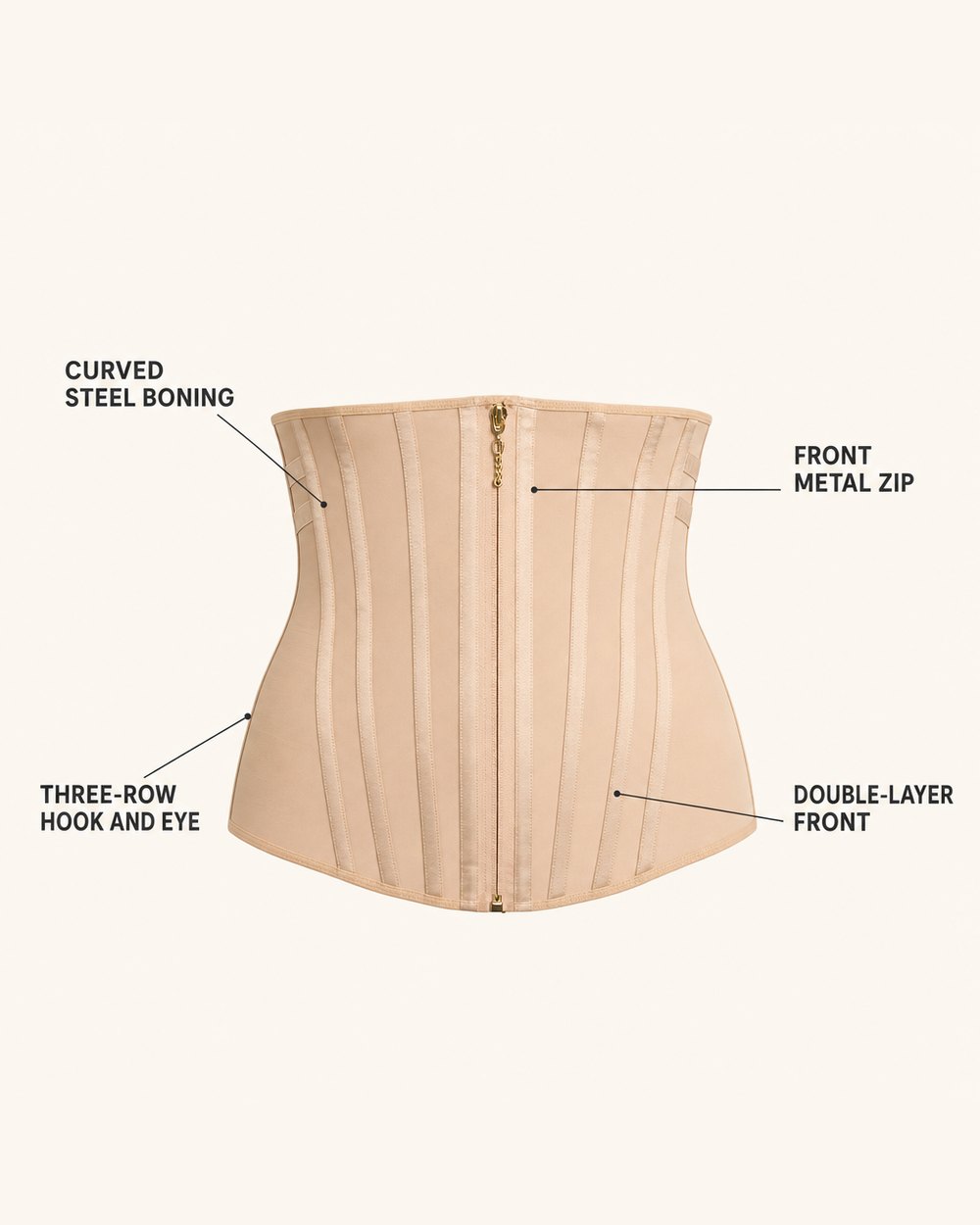
Four things do the work. Everything else is fabric.
Curved steel boning
Shaped along its length rather than straight. This is the part that holds and the part that makes holding bearable.
Three-row hook-and-eye
A vertical column of hooks down the front. Start on the outside row and move in when it feels loose, not before.
Front metal zip
Behind the hooks, so the hooks take the tension and the zip only closes it. You can get into it without help.
Double-layer compression panel
Two layers through the stomach where the load is, single layer everywhere else so it still breathes.
Measure First. This Is the Whole Ballgame.
Almost every complaint about a waist trainer is a sizing complaint wearing a different coat. Take a tape measure to your natural waist - the narrowest part, usually just above the navel - and read the row. Do not guess from your jeans size; jeans are cut at the hip.
Do not automatically size up and do not automatically size down. Buy the row your waist measurement falls in, and use the outside hook row for the first couple of weeks. The three rows are there so the corset can start comfortable and be brought in later.
How to Measure
Underbust
Around your ribcage, directly under the bust, tape flat and level.
Waist
Around the narrowest part of your torso, usually just above the navel. Do not pull the tape tight and do not hold your breath.
Hip
Around the fullest part of the hip, feet together.
Size Chart
| Size | Underbust | Waist | Hip |
|---|---|---|---|
| XS | 30 - 32 | 23 - 25 | 33 - 35 |
| S | 32 - 34 | 25.5 - 28 | 35 - 37 |
| M | 34.5 - 37 | 28.5 - 30.5 | 37.5 - 40 |
| L | 37.5 - 40 | 31 - 34 | 40 - 42.5 |
| XL | 40.5 - 44 | 34.5 - 37.5 | 43 - 45.5 |
| XXL | 44 - 47.5 | 38 - 41.5 | 46 - 49 |
| 3XL | 48 - 52 | 42 - 46 | 49.5 - 53 |
All measurements in inches. If you fall between two rows, take the larger one and start on the outside hook.
I have bought four of these things over the years and every single one ended up in a drawer by about week two. This is the first one I have actually kept wearing, and the reason is stupidly simple - it does not hurt at the bottom of my ribs.
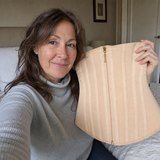
Danielle R.
I wanted it for one dress and I have ended up wearing it under work clothes twice a week. It is completely invisible under a fitted shirt, which I did not expect at this level of compression.
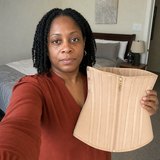
Maria S.
The three rows are the bit nobody explains properly. I started on the loosest and it was comfortable straight away. Six weeks later I am on the middle row and it feels the same as the outside row did on day one.
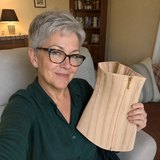
Angela P.
What the First Six Weeks Usually Look Like
Day one
Outside hook row only
Fasten it on the loosest row and wear it for two or three hours. If you cannot take a full breath, the size is wrong, not the row - that is what the returns window is for.
Week one
Under clothes
This is when most people work out what it disappears under and what it does not. Fitted knits and shirts, yes. Very thin jersey, less so.
Week three
The middle row
The outside row starts to feel slack. Move in one row - not two. If the middle row is uncomfortable after an hour, go back out and try again in two weeks.
Ongoing
Hand wash, hang dry
No machine, no dryer, no iron and no bleach. The steel and the elastic both object. Washed by hand it stays the shape it came in.
What People Say
Robin T.
Verified buyer
I ordered this expecting to send it back, because everything else I have tried has been either useless or unwearable. What actually happened is that I wore it for a full nine-hour day the second week and forgot about it twice. It does not roll. I cannot stress that enough - it does not roll when you sit, which every other one I own does within about twenty minutes.
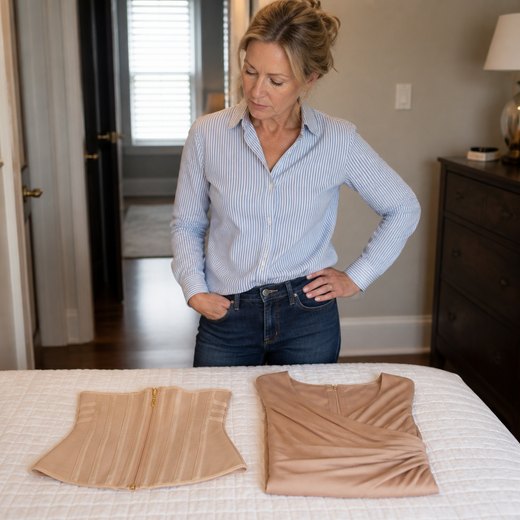
Michelle C.
Verified buyer
Do the measuring. I nearly ordered off my dress size and would have been two rows out. I measured my waist properly, took the size the chart said, and it fits like it was supposed to. The front zip means I can get into it by myself, which sounds minor until you have wrestled with a back-lacing one on your own.
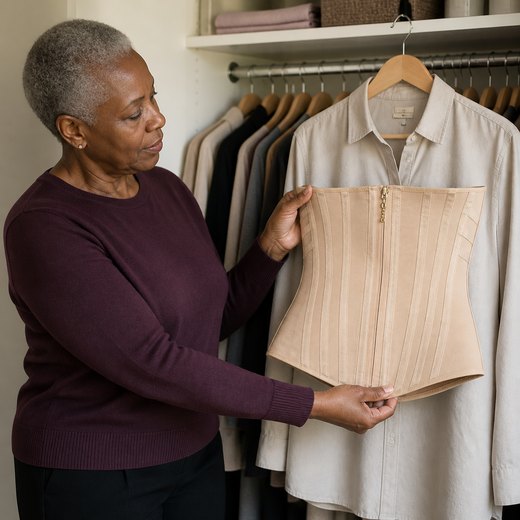
Denise W.
Verified buyer
The high back is the part I did not know I wanted. It goes all the way up, so there is no line across my back under a fitted top and nothing spilling over the edge. The front sitting lower is deliberate too - it covers the lower stomach rather than stopping above it and pushing everything down.
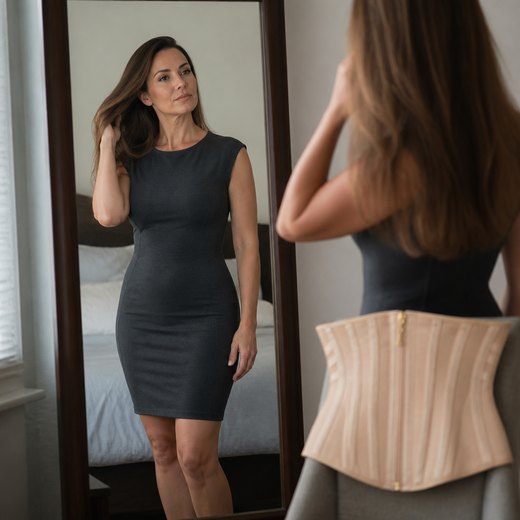
Paula H.
Verified buyer
I have worn corsets on and off for about fifteen years and the boning on this is genuinely better than things I have paid a lot more for. It is firm without being rigid, and after four hand washes it has not lost its shape or gone soft anywhere. For the money I did not expect the construction to be this good.
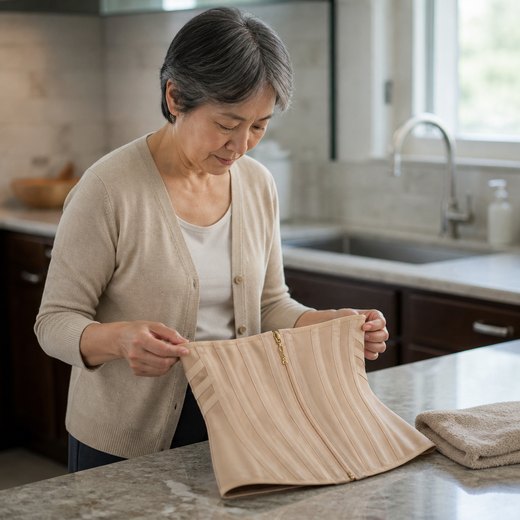
Karen W.
Verified buyer
Honest note: the first hour is an adjustment and nobody tells you that. It is not painful, it just feels like a lot. By about the third wear it stopped registering. I would tell anyone buying their first one to start on the outside row and give it a week before deciding anything.
Individual results vary and depend on fit and how consistently the garment is worn. A waist trainer changes your shape while you are wearing it; it is not a weight-loss device and makes no permanent change to your body. Do not wear it so tightly that it restricts breathing, and take it off if it causes pain or numbness. If you are pregnant, recovering from surgery, or have a hernia, acid reflux or any condition affecting the abdomen or ribs, speak to your doctor before wearing compression garments.